
Original Radiation Analysis

Surface A

Surface B
The pavilion is made up of three components: the shell, a steel visor/shade, and seating that wraps around the inside and outside of the pavilion. The radiation analysis shows that the outer shell and outer seating (Surface A) are greatly impacted by the sun, while the inner shell and inner seating (Surface B) experience little to no effect.
Radiation Maps
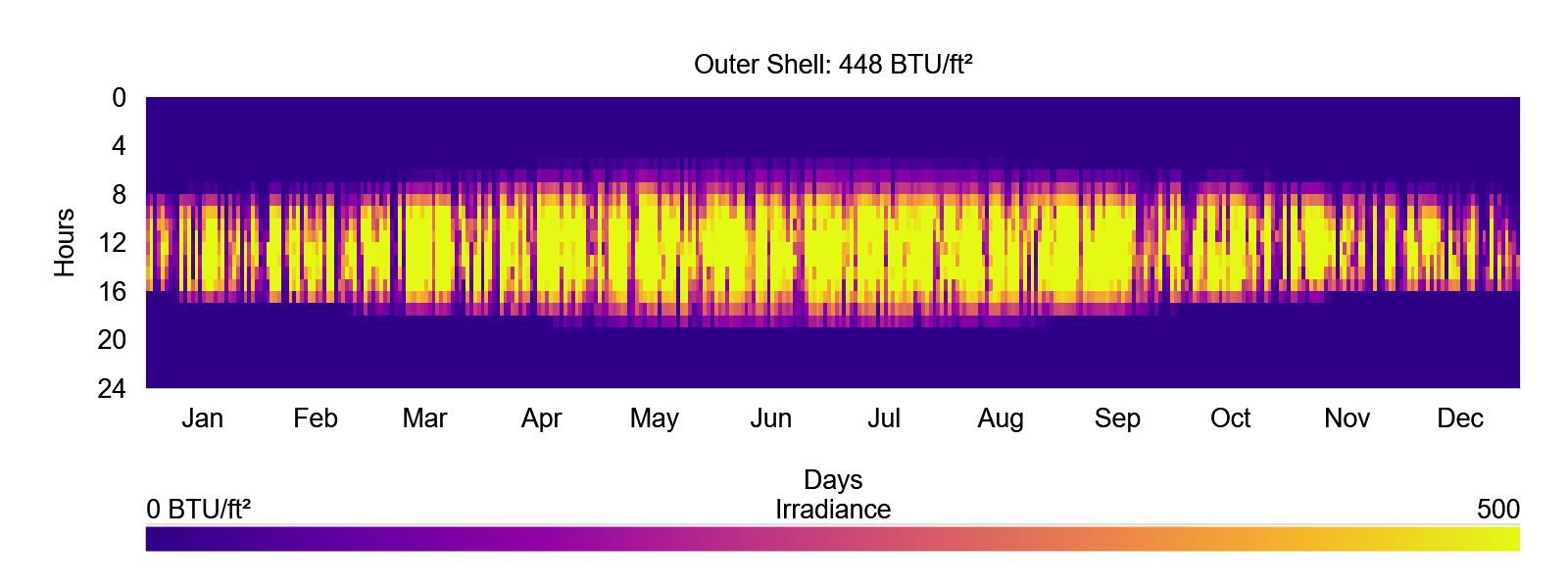
Surface A
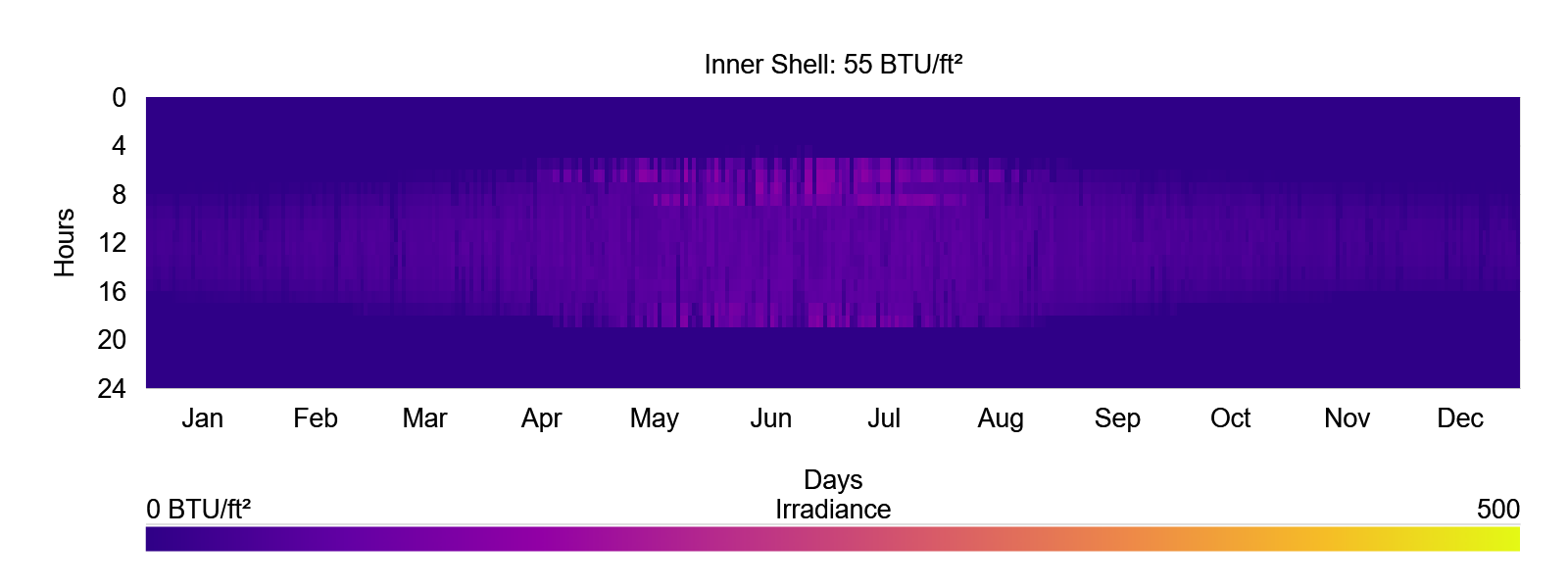
Surface B
Sun Path Diagrams
Because the outer shell (Surface A) is round and mostly South facing, the sun’s radiation is always impacting the facade. The impact is largest around solar noon throughout the year.
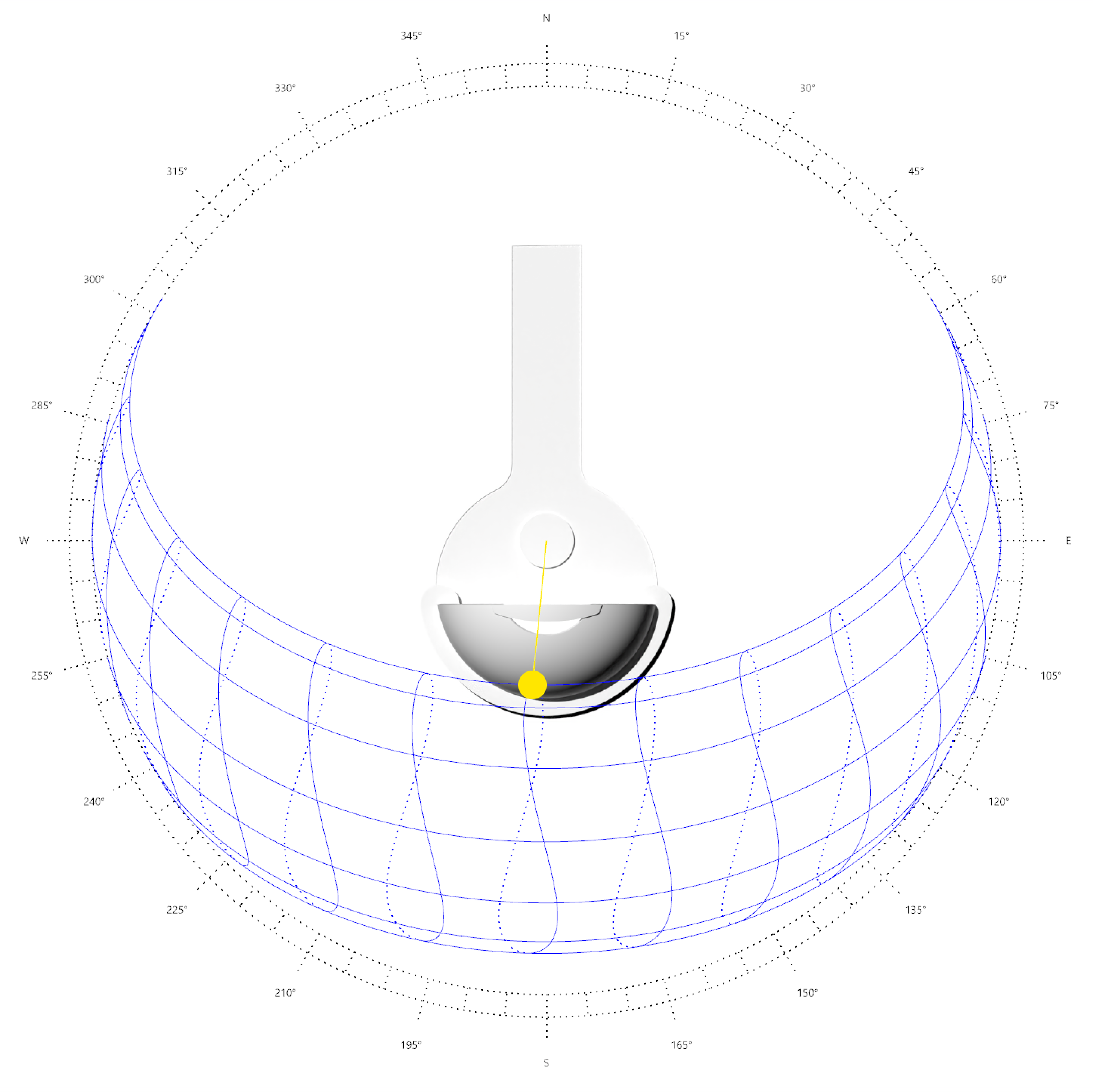
JUNE
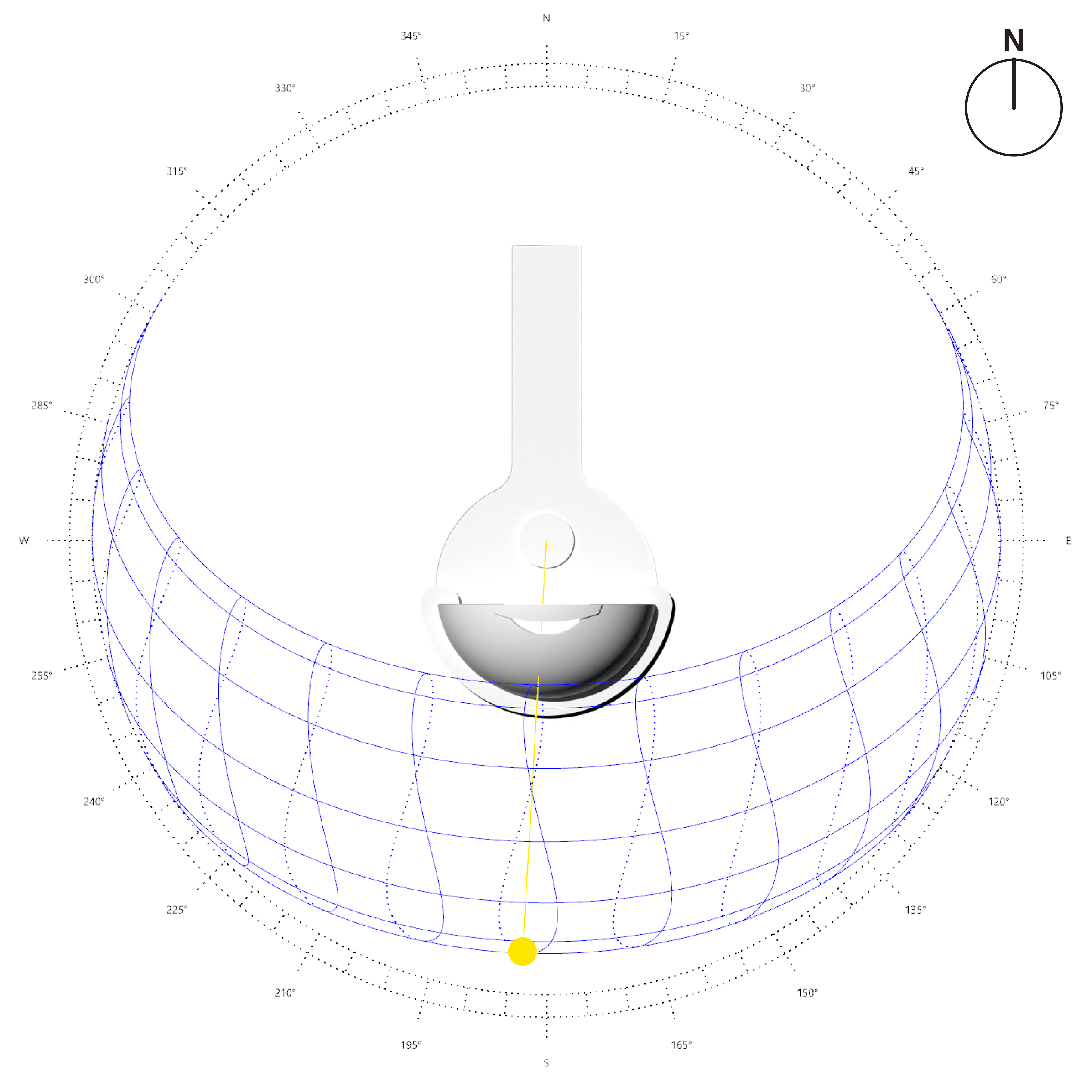
DECEMBER
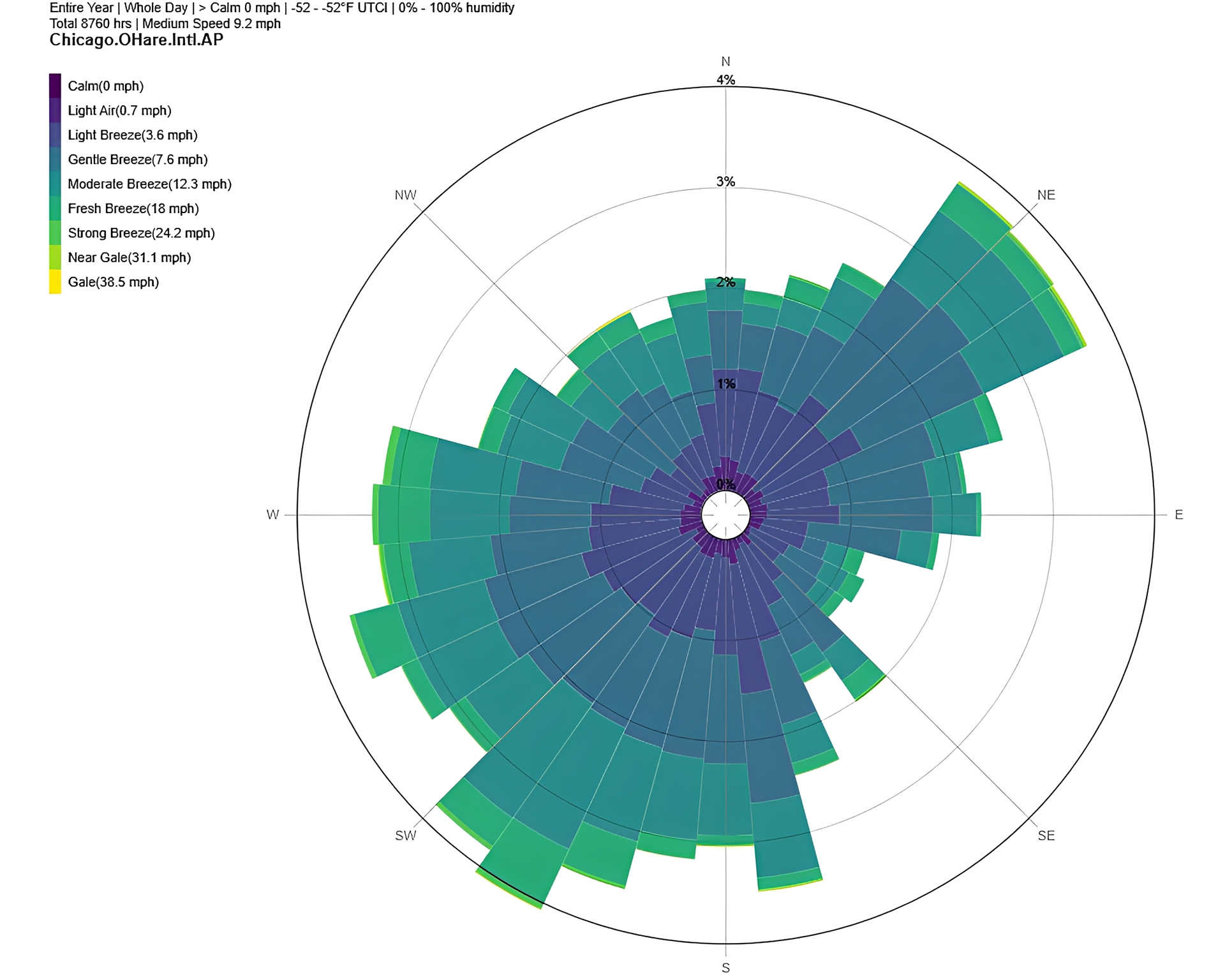
Wind Rose Diagram
The shell’s opening faces North and the majority of the strong winds in Chicago come from the South. As such, parkgoers standing or seated within the pavilion shell are protected, while those seated outside will feel the effects of these strong winds.
Improved Radiation Analysis


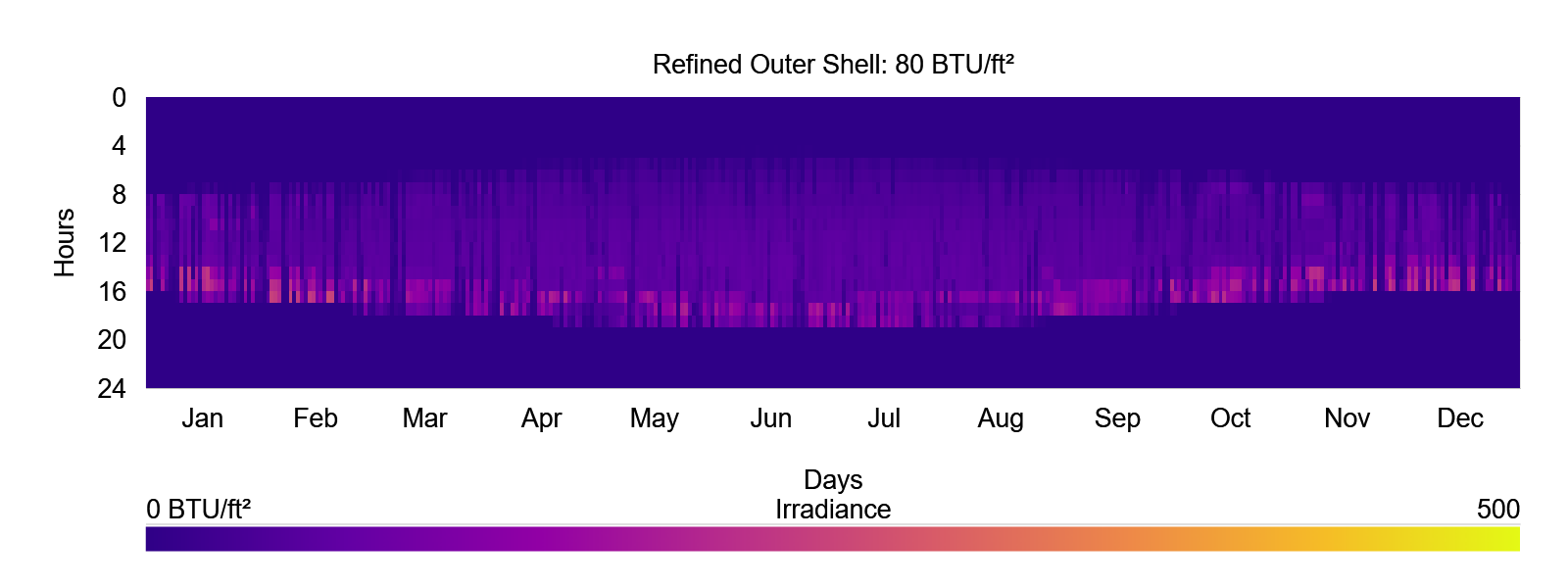
Radiation Map - Refined Outer Shell (A)
Improvements and Results
There were three main objectives for the proposed improvements to the pavilion structure: decreasing the direct solar radiation to the outer shell and outer seating (Surface A) through additional shade, preserving visibility of the lake, and maintaining or improving ventilation within the shell.
To decrease the solar impact on surface A, four overhangs were added five feet away from the seating. The openings between the overhangs are about three feet tall, with the support hindrance between each being six inches. This shades parkgoers from the direct sun without disrupting their views of the lake and surrounding area.
Additionally, use of the overhangs, instead of adding a solid surface in front of the outer seating and outer shell, creates space for wind to enter the area thereby still allowing natural ventilation.